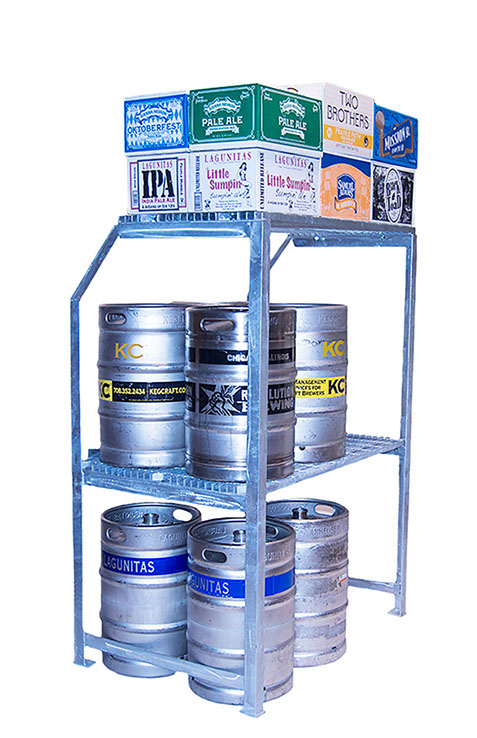
How To Use
When using these profiles, they can be a singular shelf section or multiple of the same profile strung together to form a continuous run of shelving. You cannot link one shelving profile to any of the other four profiles offered. To do so would remove the shelving from the Ready Ship program and become our original Custom Beer Cooler Shelving ordering format. If the initial shelving needs to incorporate an attachment to make a turn down an adjacent wall, this also will remove the shelving from the Ready Ship program. Click the Example link to walk you through a step-by-step process for applying the proper size shelving to full interior dimensions of a walk-in cooler.
Example
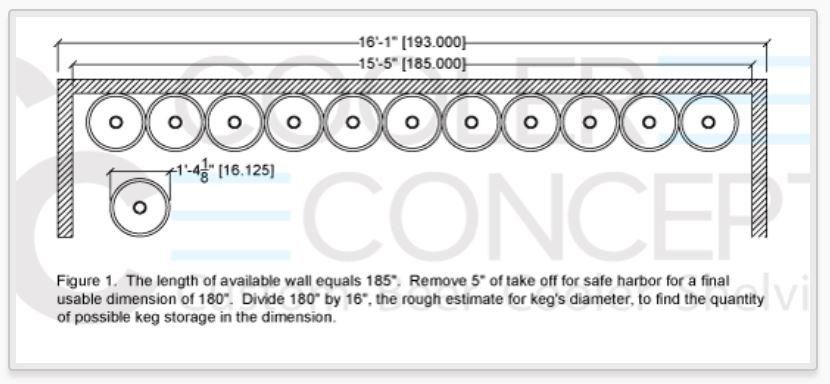
You have an interior cooler depth of 185” (door wall to opposite wall). Along one of the 185” side walls you want to place our DKS shelving. You may want to maximize the storage potential or only have a certain number of kegs stored. Let’s assume the former and plan for a whole wall of shelving. You should take off from the 185” dimension to allow for a safe harbor (5” for odd size dimensions, 4” for even size dimensions is a good standard). Keep in mind additional obstructions, i.e. star wheels, conduits, condensers, etc., which may require an extra amount of hold-off. Divide the remainder of 180” by 16” (rough estimate keg size) to break down into the number of kegs wide available for storage (11+) (see Figure 1).
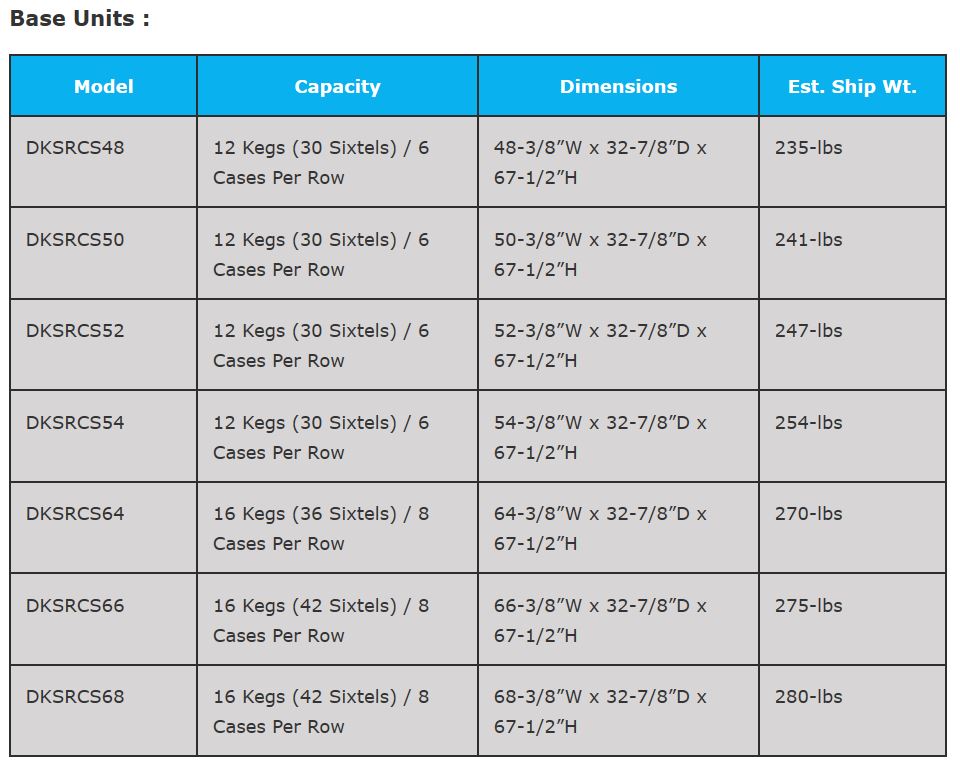
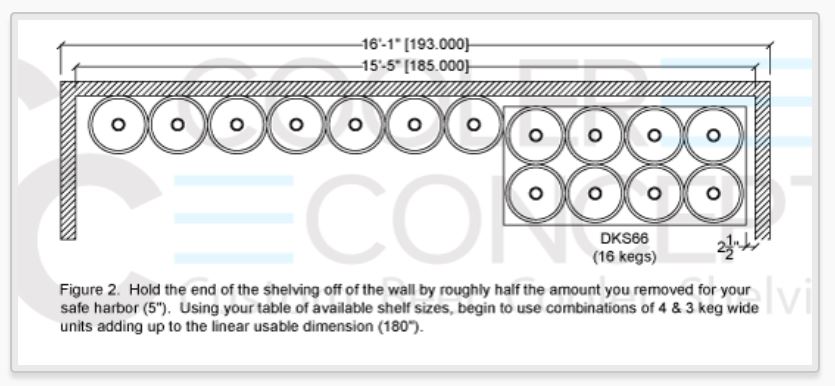
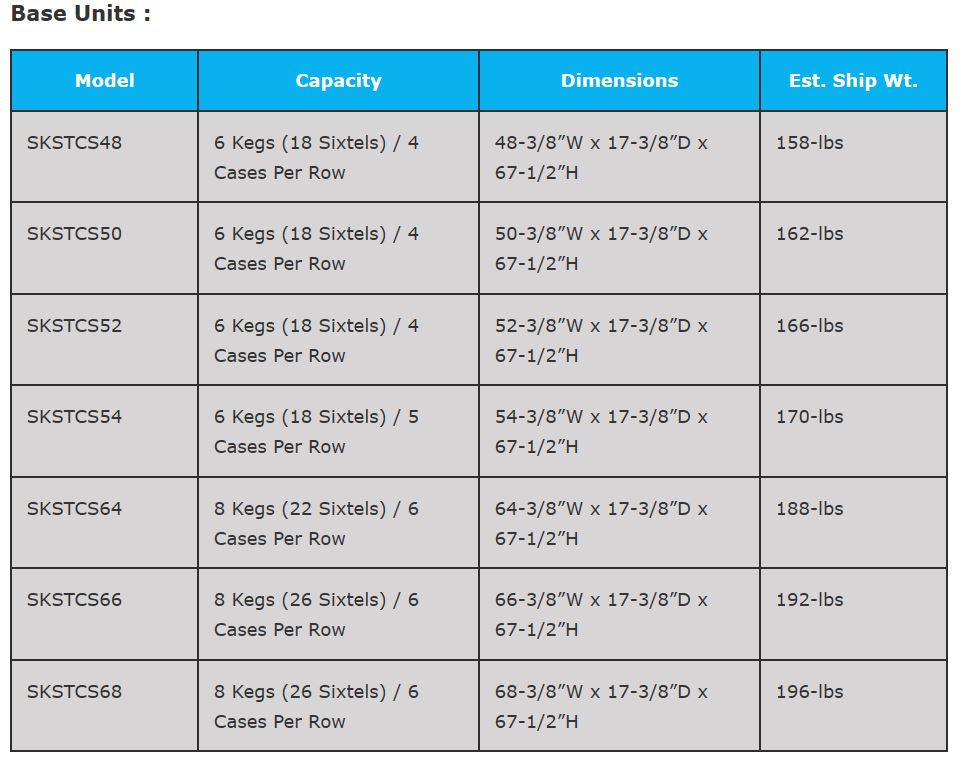
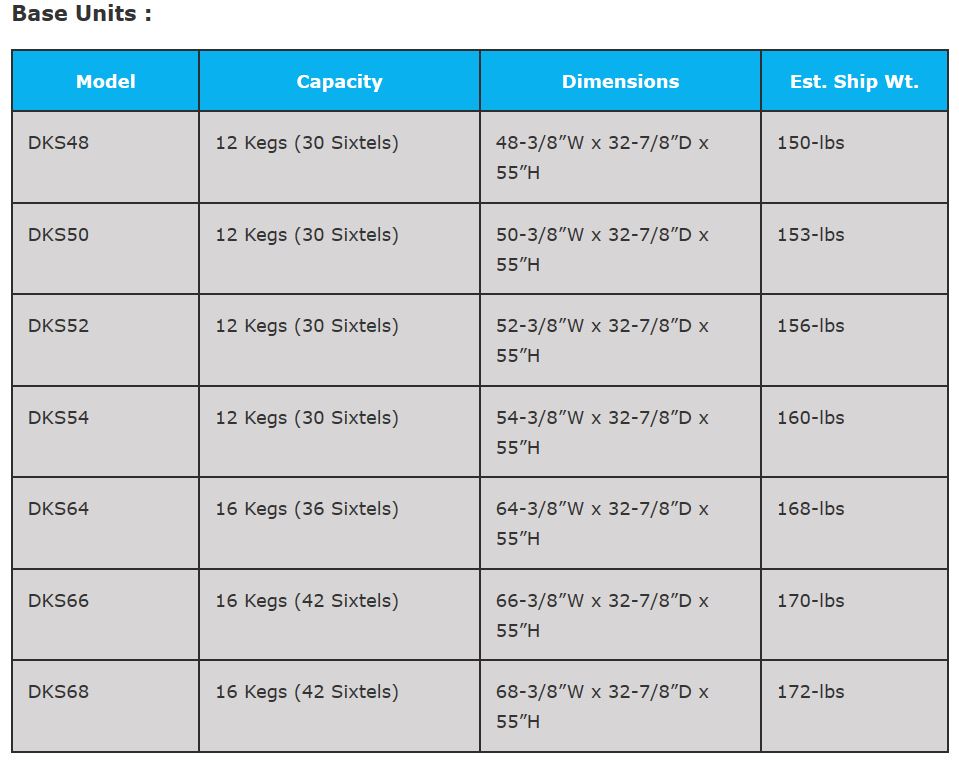
Now that you know you have 11 kegs wide, start to use combinations of widths to make this dimension using the Base Unit table on the 2nd page of the profile spec sheet. You might choose a DKS66 as your base unit to start with (see Figure 2). You should hold the end of the unit off the wall when beginning by 2” or 2-1/2” (half of the amount you removed for safe harbor). In this case we are holding off by half of 5”.
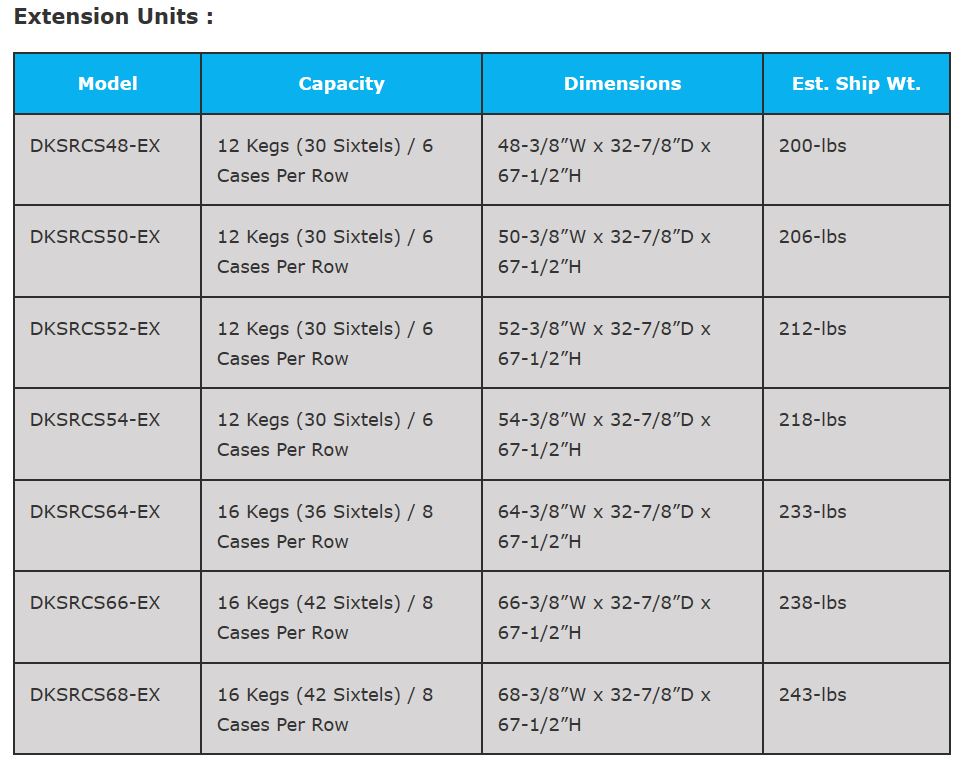
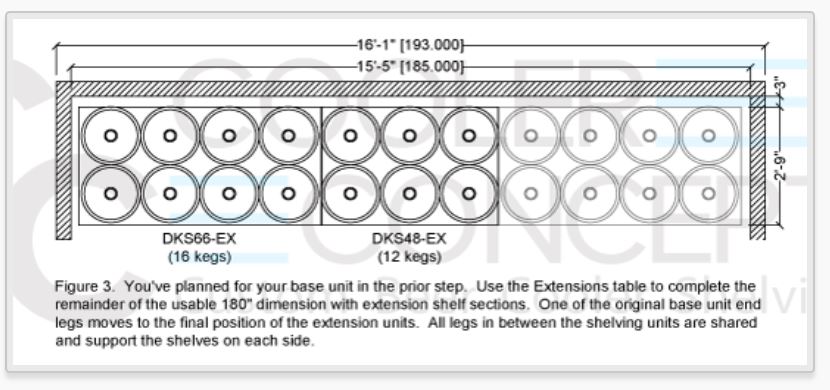
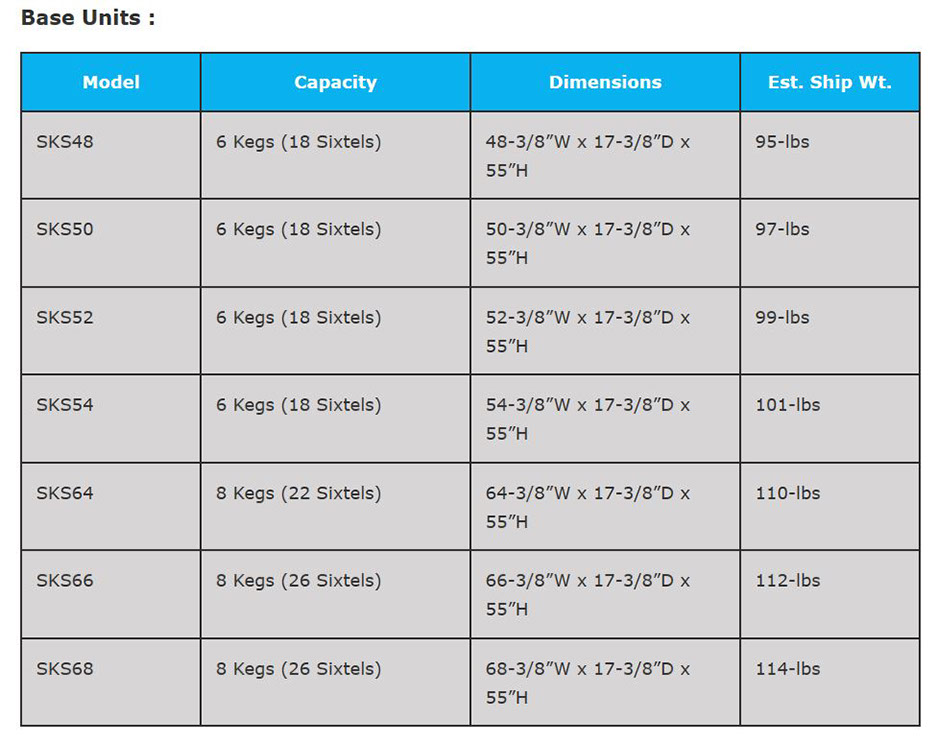
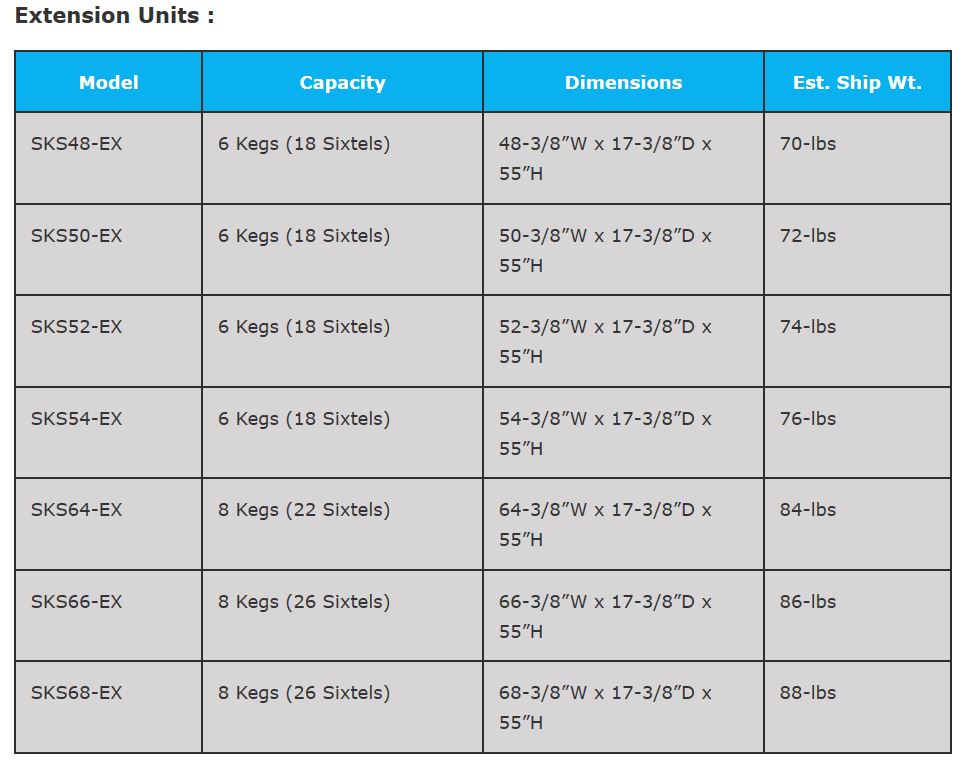
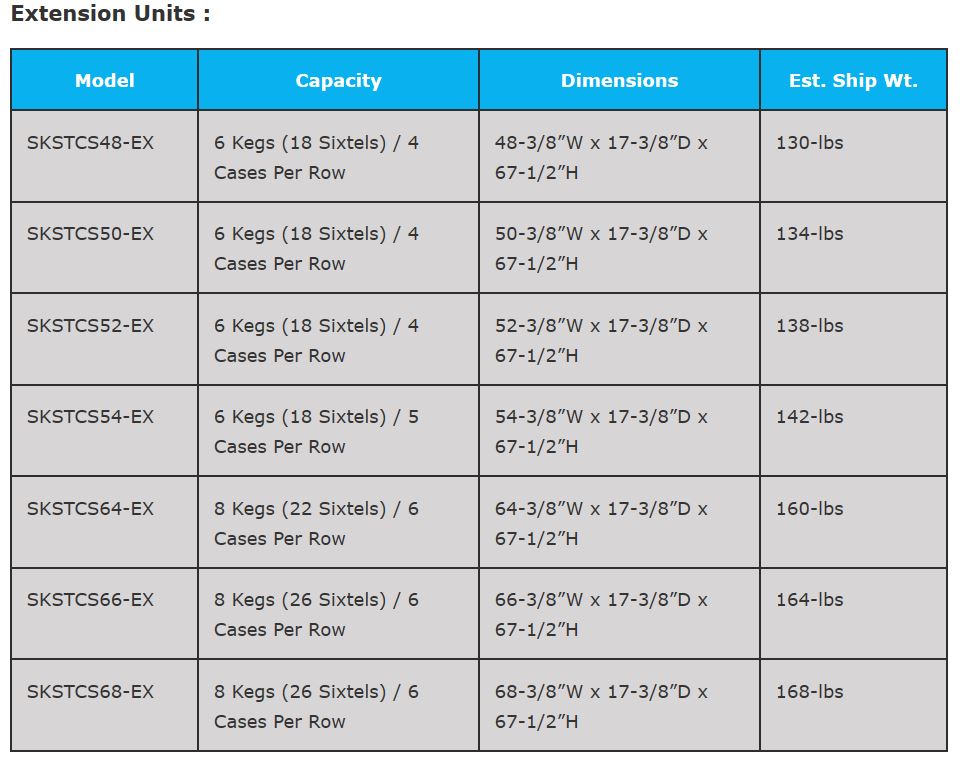
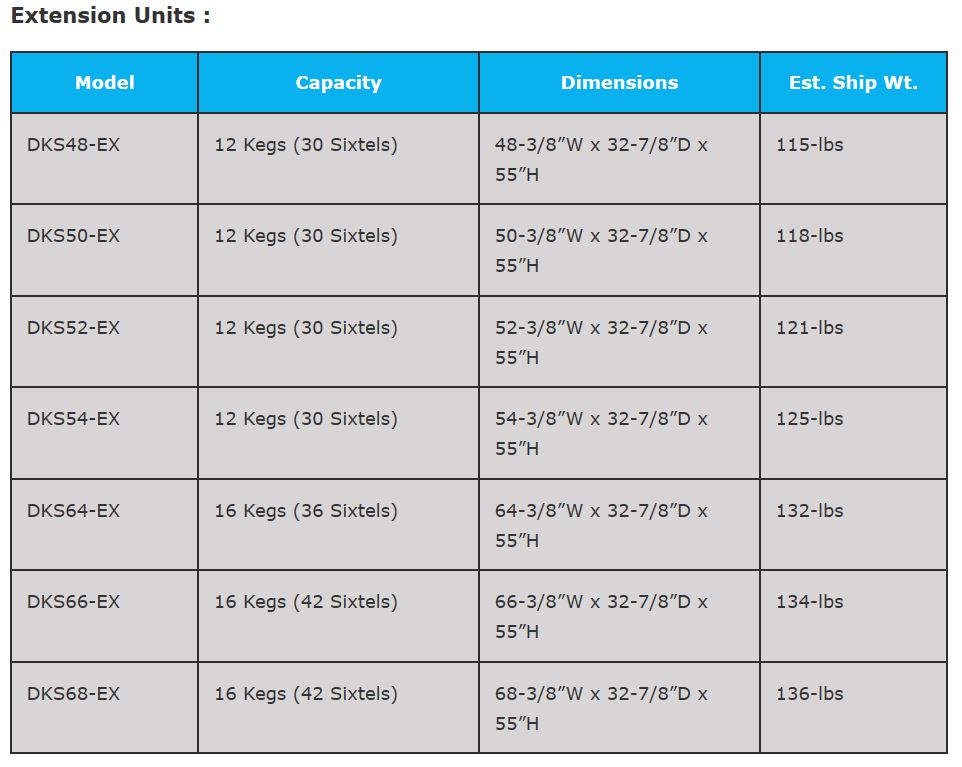
Using the Extension Unit table, add additional extension units to complete remainder of the 180” usable space: (01) DKS66-EX, (01) DKS48-EX (see Figure 3). The true total length of shelving used is 180-3/4” (accounts for leg support thickness) and stores a total of 44 kegs. There must always be 1 base profile unit per continuous run of shelving. Add extension units, notated with (-EX), for the remainder of a singular run of shelving. One of the outside legs of the base unit will move to the final outside position of the extension units. The common leg that accompanies the extension unit will support it and the shelf it is next to. The same process should be applied to the 3 remaining profiles offered through the ready ship program (DKSRCS, SKS, & SKSTCS).
Special Notes
When planning for profiles with a case shelf for 3rd tier of storage, keep ceiling heights and obstructions such as evaporator coils in mind. A typical beer case height is approximately 9-1/2”, and a typical wine case height is 12”. An Equipment Dealer placing the order is responsible to confirm that what is ordered will fit. Returns will incur a 25% restocking fee at the dealer’s expense. Dealers must obtain an authorization from factory prior to returning any materials (see factory’s return policy for a full list of instructions).

Specifications
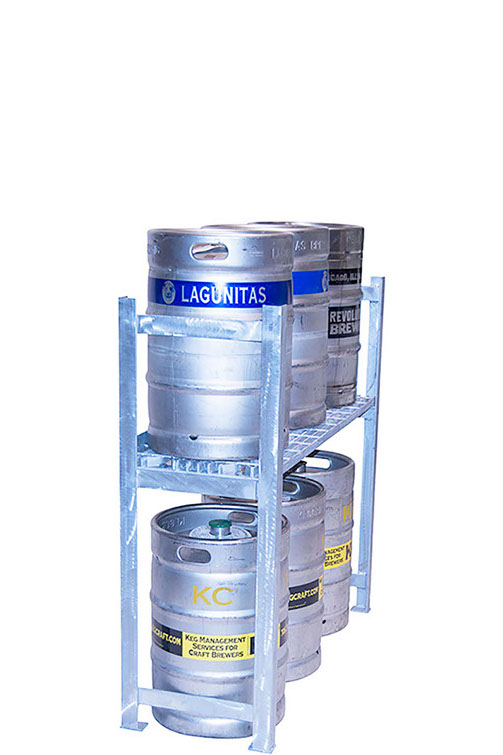
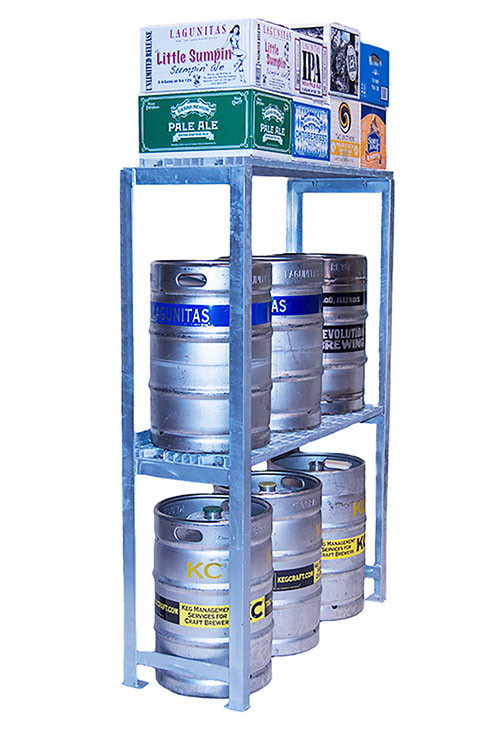
- 17” deep keg shelf at 31.5” AFF.
- Holds one (1) half-barrel (15.5 Gallon) keg deep.
- Keg shelving rated at 125lbs sq.ft.
- Welded structural steel construction
- Hot dipped galvanized finish standard on all pieces.
- Assemble with Grade 5 hardware (included).
Features
- Designed size specific for beer products
- Can increase storage capacity up to 40%
- Easy to assemble modular components
- Welded keg stop standard on all keg shelves
- Constructed to allow for maximum air flow, drainage, and prevention of debris build up
- Alternate finishes available
- Leveling feet available for uneven floors
- Weight distribution pads available for reinforced floors
- Rear safety flats available for cooler component protection

Specifications
- 17” deep keg shelf at 31.5” AFF.
- Holds one (1) half-barrel (15.5 Gallon) keg deep.
- 14.5” deep case shelf at 67.5”AFF.
- Keg and case shelving rated at 125lbs sq.ft.
- Welded structural steel construction
- Hot dipped galvanized finish standard on all pieces.
- Assemble with Grade 5 hardware (included).
Features
- Designed size specific for beer products
- Can increase storage capacity up to 40%
- Easy to assemble modular components
- Welded keg stop standard on all keg shelves
- Constructed to allow for maximum air flow, drainage, and prevention of debris build up
- Alternate finishes available
- Leveling feet available for uneven floors
- Weight distribution pads available for reinforced floors
- Rear safety flats available for cooler component protection
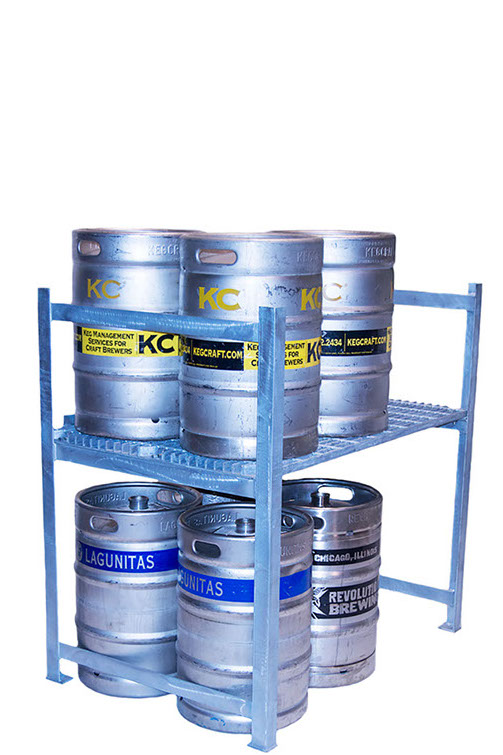

Specifications
- 33” deep keg shelf at 31.5” AFF.
- Holds two (2) half-barrel (15.5 Gallon) kegs, two (2) deep front to back.
- Keg shelving rated at 125lbs sq.ft.
- Welded structural steel construction
- Hot dipped galvanized finish standard on all pieces.
- Assemble with Grade 5 hardware (included)
Features
- Designed size specific for beer products
- Can increase storage capacity up to 40%
- Easy to assemble modular components
- Welded keg stop standard on all keg shelves
- Constructed to allow for maximum air flow, drainage, and prevention of debris build up
- Alternate finishes available
- Leveling feet available for uneven floors
- Weight distribution pads available for reinforced floors
- Rear safety flats available for cooler component protection
Specifications
- 33” deep keg shelf at 31.5” AFF.
- Holds two (2) half-barrel (15.5 Gallon) kegs, two (2) deep front to back.
- 24” deep case shelf at 67.5” AFF.
- Keg and case shelving rated at 125lbs sq.ft.
- Welded structural steel construction
- Hot dipped galvanized finish standard on all pieces.
- Assemble with Grade 5 hardware (included).
Features
- Designed size specific for beer products
- Can increase storage capacity up to 40%
- Easy to assemble modular components
- Welded keg stop standard on all keg shelves
- Constructed to allow for maximum air flow, drainage, and prevention of debris build up
- Alternate finishes available
- Leveling feet available for uneven floors
- Weight distribution pads available for reinforced floors
- Rear safety flats available for cooler component protection